Excavation in Chișinău: we dig and take the soil away

The excavator and its operator come on our low loader for the pit or trench, in Chișinău or elsewhere in Moldova; our tipper takes the soil.

Call now

Tell us what needs digging and where, and on the phone you get the price of the dig with the tipper trips.

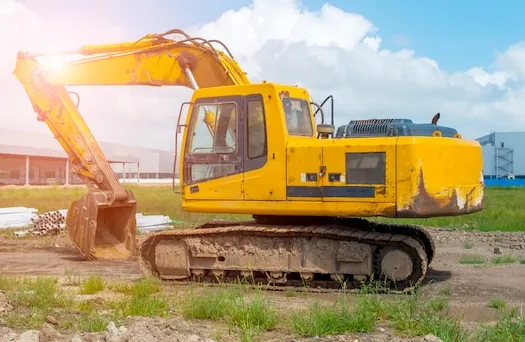
A yellow tracked excavator with its bucket lowered on a plot of dug soil

Excavation on a house plot, in plain terms

Excavation is the part of a build where soil comes out to a set shape and depth: for foundations, for pipes, for a level yard. With us the excavation work is done by our own excavator and its operator, brought to your gate on the low loader.

Before the bucket goes in, three things need settling: how deep to dig and how the walls stand, where the dug soil goes, and what runs under the plot. You will find them below, in that order.

Which kind of dig you need

Any dig on a plot takes one of the four shapes below. The shape tells you how much soil comes out and how much room it needs around it.

The pit

Wide and deep with a flat bottom: a foundation pit, a cellar or a pool. The deeper it goes, the wider the top gets compared with the bottom, because the walls are usually cut at a slope.

The soil A lot of it, all at once. Some stays for backfilling against the walls; the rest leaves in the tipper.
The trench

Long and narrow, for a water pipe, a sewer or a cable. The excavator digs it from end to end and puts the soil on one side, leaving the other side clear to work from.

The soil Stays beside the trench: once the pipes are laid, the same soil covers them.

The topsoil strip

The top layer comes off across the whole area, not deep: under a yard, a path or the footprint of a house. It holds roots and grass, which rot under paving or a foundation and leave hollows.

The soil The black, fertile soil is heaped aside for the garden. Whatever you have no use for goes into the tipper.

Cutting into a slope

On the hills around Chișinău plenty of plots slope. To get a level place for a house or a car, the excavator cuts into the upper part of the slope and leaves a sloping bank behind the level pad.

The soil What comes off the top can fill the lower end of the plot or leave it, as you decide.

How deep to dig and how the walls stand

The depth comes from the drawings, the pipe or the cellar; the operator digs down to it and checks it as he goes.

  • Who sets the depth

    For a foundation it is in the drawings, for a cellar it follows the cellar's height, and for a pipe trench your plumber gives it, allowing for frost and the fall.

  • Straight walls or a slope

    In firm clay a shallow dig usually holds straight walls. Deeper, or in sandy or wet ground, the walls are cut at a slope so they do not cave in. That is why a pit is wider at the top than at the bottom, and more soil comes out than the drawings suggest.

  • The edge of the dig

    The soil heap and the excavator itself keep back from the edge, because their weight presses on the wall. On a tight plot we think this through first, so we know where the soil will go.

  • After rain

    Rainwater collects on the bottom and softens the walls. So a dug pit is usually not left open for long: the foundation or the pipes follow straight after the dig.

Where the dug soil goes

Dug soil usually takes up more room than it did in the ground, because it loosens. On a house plot the heap grows fast, so we settle beforehand where each part of it goes.

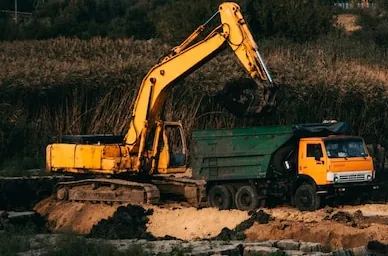
A tracked excavator loading soil with its bucket straight into a tipper body beside the dig
  • For backfilling

    The share that will cover the pipes in a trench or fill the gap beside the foundation stays on the plot, in the spot you choose.

  • The black topsoil

    The top layer, good for beds and lawn, is kept apart so it does not mix with the clay underneath.

  • What leaves

    The rest the excavator loads straight from the bucket into our tipper, with no heaps in between. The pit stays clean and the yard stays clear.

The tipper trips are worked out together with the dig.

What the ground can hide

From the cab you only see grass. On a plot with an old house, or near the road, pipes and cables often run under the top layer, and the operator needs to know where before he starts.

Pipes and cables

Water and sewer reach the house underground, and gas, power and internet can run there too, not only on poles or in a pipe along the fence. Look where they come from: the meter, the manhole, the pole and the spot where a pipe or cable enters the wall usually show the way.

Old remains

Tell us if a house once stood on the plot. Old foundations, a forgotten cesspit, bricks or concrete may lie under it, and the operator should know before the bucket gets there.

Coloured tape

If a yellow or red plastic tape turns up in the soil, there is usually a gas pipe or a cable under it. The operator stops the bucket and calls you over to look together.

The last few centimetres

Next to a known pipe or cable the operator digs more slowly, and the soil right against them is usually taken out with a shovel.

Before the day of the dig, mark where pipes and cables run with pegs or lime, and walk the operator round every mark.

Where we dig

Across all the sectors of Chișinău, in the villages around the city and in the rest of Moldova, wherever the excavator travels on the low loader.

Chișinău

Botanica, Buiucani, Centru, Ciocana, Râșcani.

Suburbs

Stăuceni, Cricova, Dănceni, Cojușna, Vatra, Mileștii Mici, Sîngera, Budești, Bîc, Floreni, Porumbeni, Ratuș.

Is your plot in Soroca, Drochia or another village in the country? Ask us, we get there too.

Questions about excavation

What makes up the price of excavation?

Two parts: the dig, with the operator's work already in it, and the tipper trips for the soil that leaves. You get both when you call and tell us the shape, the depth and the place.

Who works the excavator on site?

Our own operator, every time. He unloads it from the low loader himself and stays in the cab until the dig is done.

Who decides how deep we dig?

The drawings, your builder or your plumber. The operator digs to the depth asked for and checks it as he goes, so the bottom comes out level.

What happens if we hit a pipe?

The operator stops and shows you the spot. The digging around it then goes carefully, once you and your plumber or electrician decide what to do with it.

What goes back in if the dug soil is no good for backfill?

Sand and gravel mix, washed sand, crushed stone and gravel are all on sale from us, brought by our tipper. Against foundations and over pipes, sand or the mix usually goes in rather than clay.

Planning a dig? Have the depth, the shape and the spot ready.

Keep the drawings or at least the sizes to hand, the sector or village, and whatever you know about pipes on the plot. From these we work out the dig and the trips.

Call now
Call now